
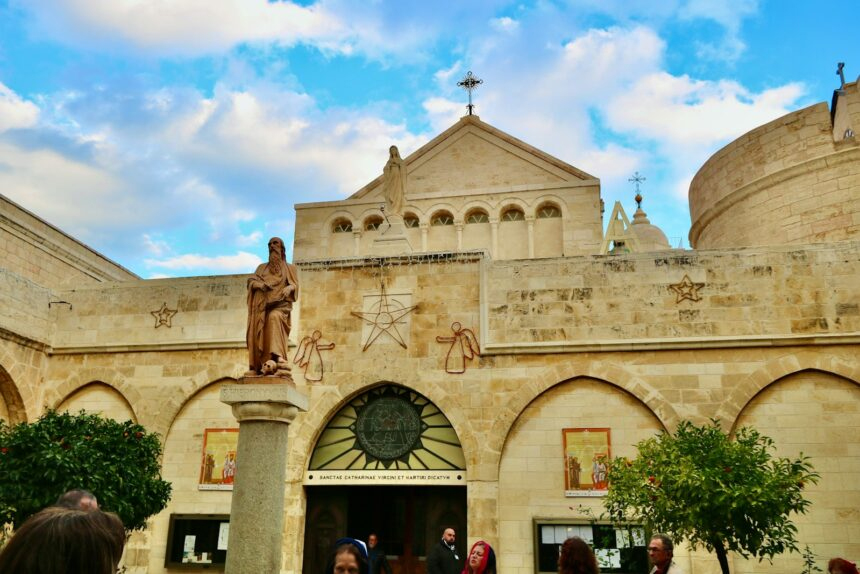
After two years of subdued observances amid war in Gaza, thousands of people gathered in Bethlehem on Christmas Eve, bringing renewed life and emotion back to the city’s historic celebrations. According to The Associated Press, crowds filled Manger Square as the city’s large Christmas tree returned for the first time since the outbreak of the Israel Hamas conflict. For many residents, the gathering symbolized resilience and a cautious sense of hope after prolonged hardship.
Bethlehem, revered by Christians as the birthplace of Jesus, had previously cancelled public Christmas festivities during the war. In place of celebrations, earlier years featured symbolic displays reflecting the devastation in Gaza, including nativity scenes surrounded by rubble and barbed wire. This year marked a shift, as religious leaders and residents sought to restore a sense of normalcy while acknowledging the pain that remains across the region.
While festive music and decorations returned, the economic impact of the war remains severe. According to local officials cited by The Associated Press, roughly 80 percent of Bethlehem’s residents depend on tourism related income. With international travel still limited, most of those celebrating were local families. Some residents reported early signs of recovery as visitors slowly begin to return, offering cautious optimism for a city hit hard by unemployment and business closures. For families like Georgette and Michael Jackaman, both longtime tour guides, this Christmas carried special meaning. It was the first full celebration for their young children, born during the years of conflict. During the war, the couple turned to selling Palestinian handicrafts online to support others who lost their livelihoods. City officials said unemployment in Bethlehem surged dramatically during the conflict, forcing thousands to leave in search of work.
Despite a ceasefire in Gaza that began earlier this fall, tensions remain high across the West Bank. Military raids, increased settler attacks, and extensive checkpoints continue to affect daily life. Christians now make up less than two percent of the West Bank’s population, raising concerns about long term demographic shifts as families leave the region due to economic and security pressures. Elsewhere in the region, Christmas events also reflected resilience. In Nazareth, the traditional Christmas parade returned, filling streets with children, floats, and costumed Santas. In Syria, worshippers prepared to return to churches previously targeted by violence, while communities worldwide marked the season in their own ways. Together, these celebrations underscored a shared message echoed in Bethlehem this year. Even after prolonged conflict, many communities continue to seek peace, light, and renewal during Christmas.